The Story Object Model: AP’s work and the industry discussion.
How can newsroom systems share the context and editorial decisions behind a developing story? AP’s work on the Story Object Model has been part of industry coverage and discussions this October.
Read the latest perspectives and join AP’s Brian Hopman for an upcoming webinar with Trint and Mimir.
A fact changes. A source is verified. An editor places a hold on part of a story. Each development may affect broadcast scripts, digital articles, graphics and social updates, but the information behind those decisions often sits in different systems.
The Story Object Model (SOM) provides a common way to represent and share that context, helping newsroom tools work from the same understanding of a developing story.
AP co-championed the Smart Stories IBC Accelerator project, which developed SOM alongside organizations including BBC, ITN and NBCUniversal, and Scripps with contributions from news organizations and technology providers across the industry.
Brian Hopman, VP and General Manager of AP Workflow Solutions, helped lead the project alongside Jon Roberts (ITN), Morag McIntosh (BBC) and Alex Bassett (NBCUniversal).
For newsroom leaders, the opportunity is to reduce repeated updates and manual coordination while preserving the editorial judgment behind the journalism. As more tools incorporate AI, access to accurate, current story context becomes increasingly important.
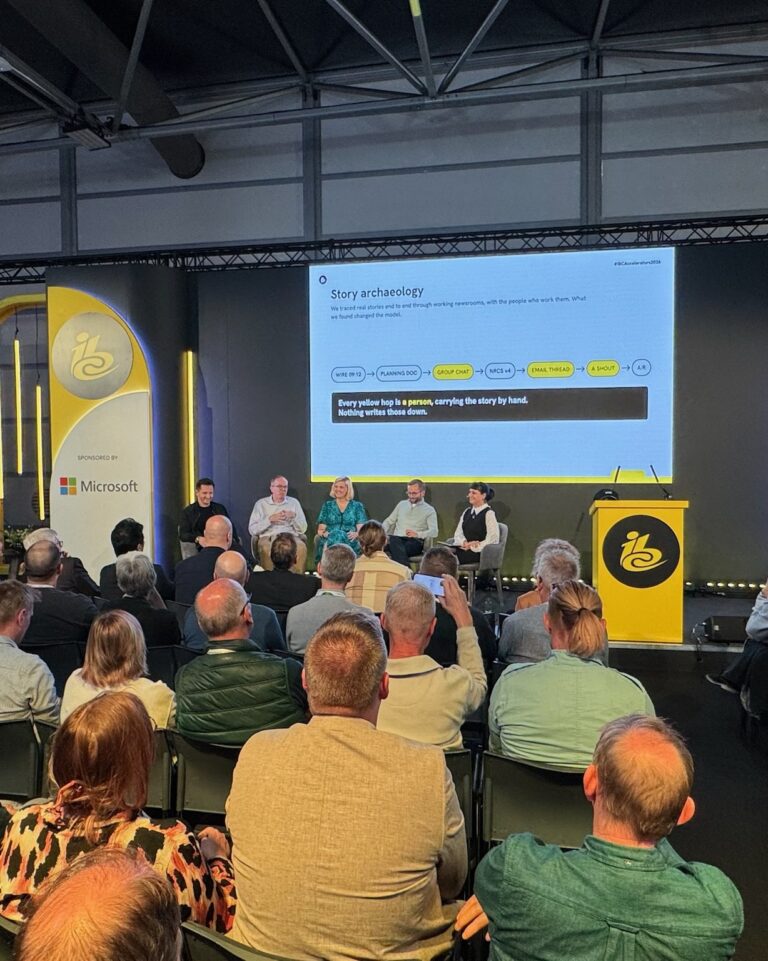
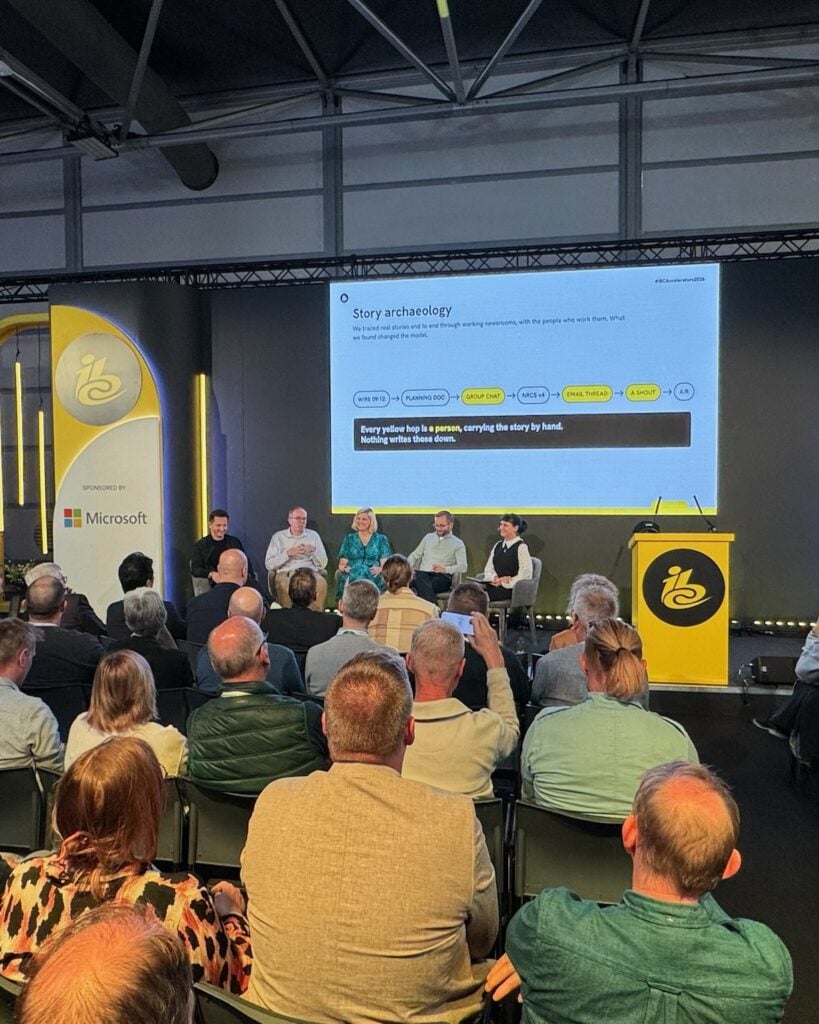
IBC 2026 – Unveiling of the Story Object Model with Brian Hopman (AP) Workflow Solutions, Jon Roberts (ITN),Morag McIntosh (BBC) and Alex Bassett (NBCUniversal).
Brian Hopman discusses SOM with TVBEurope.
“Everything talks, but nothing understands.”
That is how Brian describes the challenge in his October interview with TVBEurope. Systems can exchange content without knowing what the newsroom has confirmed, what remains uncertain or what an editor has approved.
The interview explores how shared context could support more accountable AI workflows, and how newsrooms could begin using SOM without replacing their existing systems.
“A newsroom could start with one or two systems around a specific use case,” Brian explains.
That could mean preserving source information, sharing an editorial decision or keeping related outputs aligned. The practical question is where better coordination would make the greatest difference in your newsroom.
Brian Hopman, VP & General Manager of AP Workflow Solutions, interviewed by TVB Europe.
Bringing newsroom experience into the standards discussion.
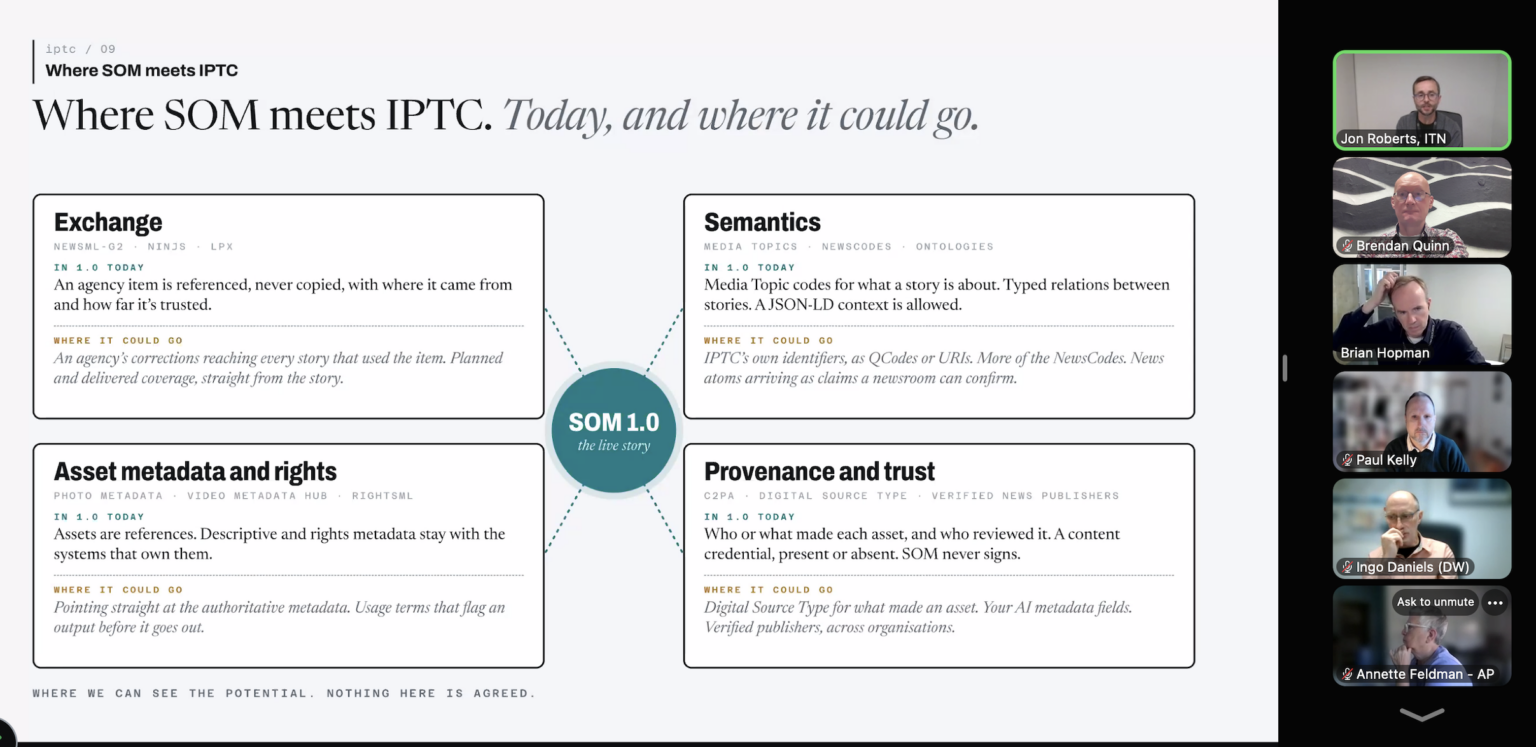
Brian also joined ITN Chief Technology Officer Jon Roberts to present SOM at the IPTC Autumn Meeting in October.
The presentation brought the initiative to media technology specialists working on how news information is structured, exchanged and verified.
Jon Roberts, CTO, ITN and Brian Hopman, VP & General Manager, AP Workflow Solutions present at the IPTC Autumn meeting.
Broader participation matters because the model needs to reflect different newsroom environments, editorial practices and technology choices. News organizations and technology providers can contribute experience, test the approach and help identify where further development is needed.
In November we’ll continue that discussion, bringing together newsroom and technology perspectives on where SOM could make a practical difference.
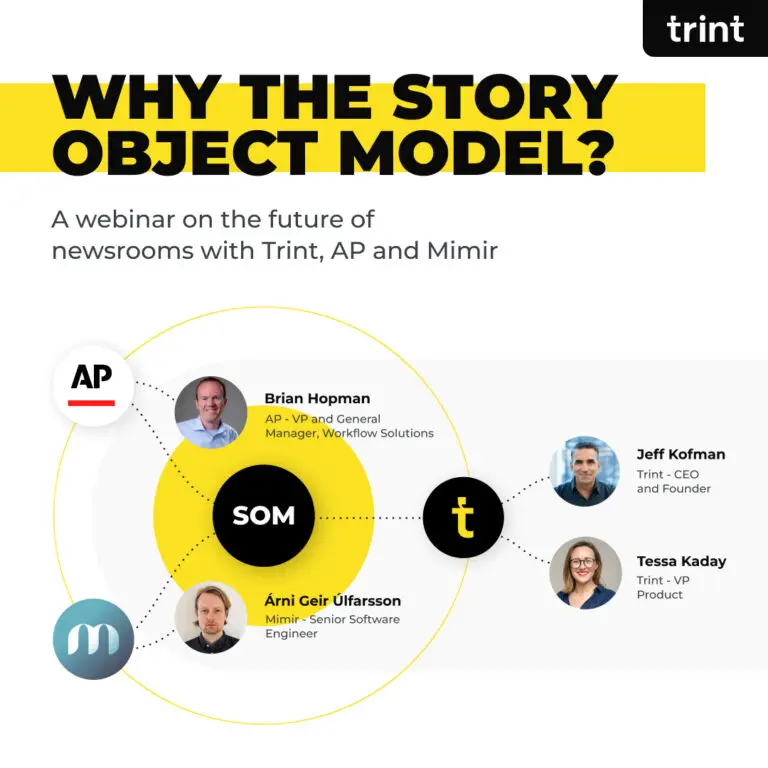
On Wednesday, November 11, Brian Hopman will join speakers from Trint and Mimir for a webinar exploring why SOM is being developed and what it could mean for newsroom workflows.
Brian will bring AP’s perspective as a co-champion and his experience helping lead the initiative. The discussion will also feature Trint CEO and Founder Jeff Kofman, VP Product Tessa Kaday, and Mimir Senior Software Engineer Árni Geir Úlfarsson.
If your teams still carry story updates manually between tools, the session offers an opportunity to explore the shared approach being developed to address that problem.